
Qwen Coder Explained: Qwen2.5-Coder and Qwen3-Coder for Code Generation and Agentic Development
“Qwen Coder” is the code-specialized branch of Alibaba’s Qwen (Tongyi Qianwen) model family, split into two generations: the dense Qwen2.5-Coder series and the Mixture-of-Experts Qwen3-Coder family. You can try these models for free in Qwen Chat, which puts both generations behind a single browser interface. Qwen Coder models are open-weight code LLMs built for code generation, completion, repair, and agentic coding, released by the Qwen Team according to the Qwen3-Coder announcement.
This reference walks through what each generation is good at, the exact sizes on offer, where the weights live, and every practical way to run them — chat, API, self-host, or inside an IDE/CLI agent. Numbers below are attributed to Qwen’s own benchmarks and documentation, not independently verified, so treat comparative claims (“matches GPT-4o,” “comparable to Claude Sonnet 4”) as the Qwen Team’s own framing.
What Is Qwen Coder? (The Short Version)
Qwen, also known as Tongyi Qianwen, is developed by Alibaba Cloud, per Wikipedia. “Qwen Coder” is the umbrella name for the code-specialized models inside that family, and there are two live generations today: Qwen2.5-Coder, a dense series released in November 2024, and Qwen3-Coder, a Mixture-of-Experts family first announced on July 22, 2025.
This is an unofficial reference page and is not affiliated with Alibaba or the Qwen team. All model names, benchmark figures, and release dates below are drawn from Qwen’s own blog posts and GitHub documentation and are attributed accordingly.
Qwen2.5-Coder vs Qwen3-Coder at a glance
| Qwen2.5-Coder | Qwen3-Coder | |
|---|---|---|
| Generation released | November 2024 | July 22, 2025 |
| Architecture | Dense (every parameter active) | Mixture-of-Experts (MoE) |
| Representative sizes | 0.5B – 32B (6 sizes) | 30B-A3B up to 480B-A35B |
| Native context | Up to 128K | 256K (up to 1M with YaRN) |
| Headline strength | Code generation, completion, repair | Agentic coding, tool-use, browser-use |
| Reasoning mode | Non-thinking | Non-thinking only (no <think> blocks) |
| Best for | Single-turn coding tasks, local/edge deployment | Multi-step repo work, coding agents |
Qwen2.5-Coder: The Dense Workhorse Series
Qwen2.5-Coder is the older of the two generations and remains relevant for anyone who needs a smaller, single-GPU-friendly model rather than a large agentic system. According to the Qwen2.5-Coder family blog post, the series was built specifically to cover code generation, completion, reasoning, and repair across a wide span of hardware budgets.
The six dense sizes
Qwen2.5-Coder ships in 0.5B, 1.5B, 3B, 7B, 14B, and 32B parameter sizes, and each size comes with both a Base and an Instruct variant.
| Size | Context window | License | Note |
|---|---|---|---|
| 0.5B | 32K | Apache 2.0 | Smallest, edge/local use |
| 1.5B | 32K | Apache 2.0 | Lightweight local coding |
| 3B | 32K | Qwen Research license | Only non-Apache size |
| 7B | 128K | Apache 2.0 | Balanced single-GPU option |
| 14B | 128K | Apache 2.0 | Higher-quality single-GPU |
| 32B | 128K | Apache 2.0 | Flagship dense size |
What it is good at
Qwen describes Qwen2.5-Coder-32B-Instruct as the state-of-the-art open-source code model at the time of its release, stating that it matches the coding capabilities of GPT-4o on generation benchmarks including EvalPlus, LiveCodeBench, and BigCodeBench. For code repair, Qwen reports an Aider score of 73.7, which the team frames as comparable to GPT-4o on that task. On code completion — the fill-in-the-middle (FIM) use case used by IDE autocomplete — Qwen says the 32B model reaches state-of-the-art results across five benchmarks: HumanEval-Infilling, CrossCodeEval, CrossCodeLongEval, RepoEval, and SAFIM. These are all Qwen-reported figures, not independently audited scores, so read them as the vendor’s own positioning.
Multi-language strength
- Scores 65.9 on McEval, a benchmark spanning more than 40 programming languages
- Scores 75.2 on MdEval, a multi-language code-repair benchmark, which Qwen says ranks it #1 among open-source models
- Shows comparatively strong results even on less-common languages such as Haskell and Racket, per Qwen’s own reporting
- Ships with both Base and Instruct checkpoints at every size, so the multilingual behavior is available whether you fine-tune or use it out of the box
Qwen3-Coder: The Agentic MoE Family
Qwen3-Coder is the newer generation, and it’s built around a different goal: not just writing correct code, but operating as a coding agent that plans, calls tools, reads results, and edits across a repository over many turns.
Today, we’re announcing Qwen3-Coder, our most agentic code model to date.
Qwen Team, Qwen3-Coder: Agentic Coding in the World
Sizes and the Mixture-of-Experts design
Qwen3-Coder was announced on July 22, 2025. Its flagship is Qwen3-Coder-480B-A35B-Instruct, a 480B-parameter Mixture-of-Experts model that activates 35B parameters per token rather than the full 480B. The family also includes the smaller Qwen3-Coder-30B-A3B-Instruct (30B total, 3B active) and Qwen3-Coder-Next, built on the Qwen3-Next-80B-A3B-Base architecture with hybrid attention plus MoE, according to the QwenLM/Qwen3-Coder README. Base, FP8, and GGUF release variants are also listed there.
Context length is 256K natively, extendable up to 1M tokens using YaRN extrapolation. Qwen states the models were pretrained on 7.5 trillion tokens with a 70% code ratio. One point worth correcting directly: the Qwen3-Coder-Instruct line runs in non-thinking mode only — it does not emit <think> reasoning blocks, unlike some other Qwen3 chat models that support a hybrid thinking mode.
Built for agentic coding
- Qwen describes Qwen3-Coder-480B-A35B-Instruct as setting state-of-the-art results among open models on Agentic Coding, Agentic Browser-Use, and Agentic Tool-Use
- Qwen states it is “comparable to Claude Sonnet 4” on these agentic tasks
- Reported as state-of-the-art among open-source models on SWE-Bench Verified, without relying on test-time scaling
- Supports fill-in-the-middle (FIM) completion across every release in the family, so it isn’t purely an agent model — it still covers standard completion workflows
“Agentic” here means the model can hold a multi-turn plan, issue tool calls, read back the results (test output, file diffs, browser state), and keep editing across a codebase rather than answering with a single code block.
Open-Weight Availability and Licensing
Most Qwen-Coder weights are open and downloadable from Hugging Face and from ModelScope. Licensing is mostly Apache 2.0, a permissive license that allows commercial use, with a small number of exceptions — notably Qwen2.5-Coder-3B, which is released under the Qwen Research license rather than Apache 2.0.
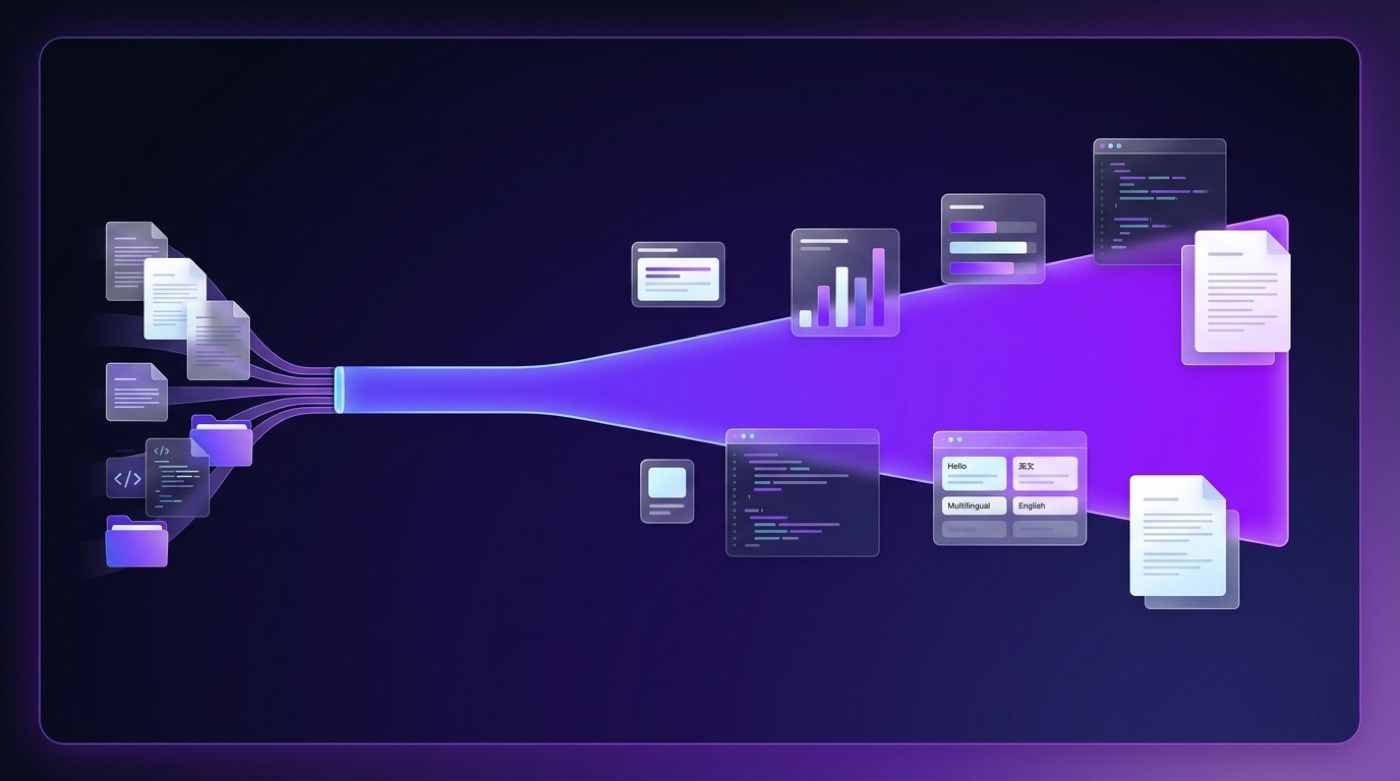
It’s worth being precise about the term “open-weight”: Qwen releases the trained model weights for download, but not the full training data or training method, so these models are open-weight rather than fully open-source in the broader sense. Wikipedia notes that the wider Qwen family now spans 100+ open-weight models that have collectively been downloaded tens of millions of times, which gives a sense of how widely these releases circulate outside Alibaba’s own infrastructure.
How to Access Qwen Coder
There are four practical routes into Qwen Coder, and which one makes sense depends on whether you want a quick answer, a production integration, full local control, or an agent embedded in your editor.
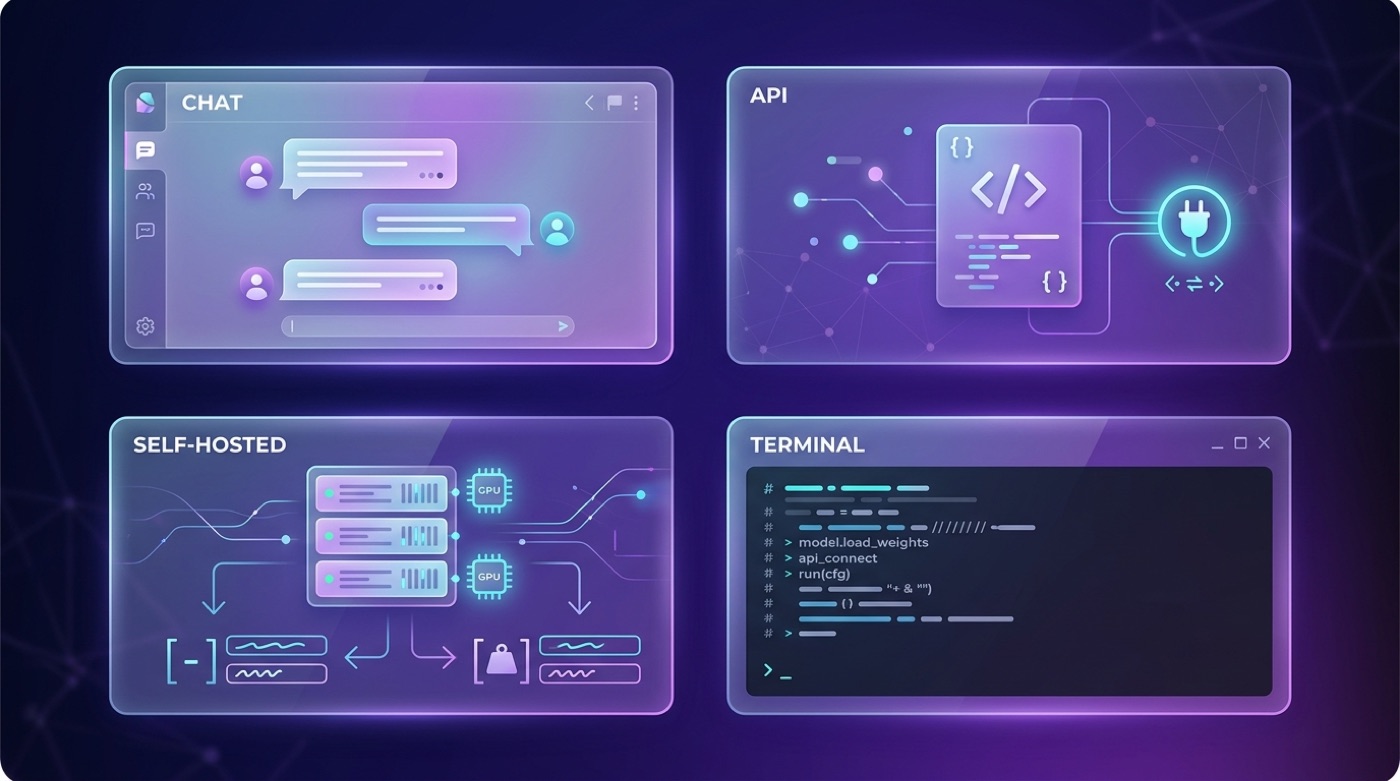
1. Chat (no setup)
The simplest route is the browser: use Qwen Chat at chat.qwen.ai, or go through try Qwen Chat for free access without any installation. This is the fastest way to test a prompt, generate a function, or ask a coding question without touching an API key.
2. API (DashScope / Alibaba Cloud Model Studio)
For production use, the models are available through Alibaba Cloud Model Studio, also referred to as DashScope, via an OpenAI-compatible endpoint. The international base URL is https://dashscope-intl.aliyuncs.com/compatible-mode/v1, and the example model id for the flagship is qwen3-coder-plus. Because the endpoint is OpenAI-compatible, existing code written against the OpenAI SDK generally needs only the base URL and model name changed to point at DashScope instead.
3. Self-host (open weights)
- Download the weights you need from Hugging Face or ModelScope
- Serve them with
transformersfor the simplest setup, or vLLM / SGLang for higher-throughput inference - For local, resource-constrained machines, use a quantized GGUF build instead of the full-precision weights
- Alternatively, pull a ready-made build through Ollama (available for both qwen2.5-coder and qwen3-coder)
- If you plan to use function calling, make sure your serving stack uses the updated tool parser noted in the GitHub README — older parsers won’t handle the newer tool-call format correctly
4. IDE / CLI agentic tools
This is where the agentic side of Qwen3-Coder is most visible. Qwen Code is an open-source CLI forked from Gemini CLI, installed with npm i -g @qwen-code/qwen-code, and built specifically to drive Qwen3-Coder’s agentic workflow from the terminal. The models also work inside Cline in VS Code, and can be wired into Claude Code through a DashScope proxy/router, letting you keep an existing agentic-coding editor while swapping the underlying model.
Programming Languages Supported
Qwen2.5-Coder is documented as covering more than 40 programming languages, as measured by the McEval benchmark. The newer Qwen3-Coder README goes further, listing support for 358 coding languages in total — Qwen’s own stated coverage figure, spanning far more than the mainstream languages most benchmarks focus on.
- Mainstream languages: Python, JavaScript/TypeScript, Java, C/C++, C#, Go, Rust, PHP, Ruby, Swift, Kotlin, SQL
- Less-common but still covered: Haskell, Racket, Solidity, Verilog, COBOL, Zig
- Multi-language code repair (not just generation), per the MdEval results discussed above for Qwen2.5-Coder
- Coverage claims apply across both Base and Instruct checkpoints, since the underlying pretraining corpus is shared
Which Qwen Coder Should You Use?
Sizing this down to a practical decision — none of this is a benchmark claim, just guidance based on the sizes and access routes above:
- Laptop or light local tasks — a small Qwen2.5-Coder model (1.5B–7B), or Qwen3-Coder-30B-A3B / Qwen3-Coder-Next if you want MoE efficiency on modest hardware
- Best quality on a single GPU — Qwen2.5-Coder-32B-Instruct, the flagship of the dense series
- Repo-scale agentic work with budget for a large host or API — Qwen3-Coder-480B-A35B-Instruct, either self-hosted or through the
qwen3-coder-plusAPI endpoint - Quick testing with zero setup — Qwen Chat, to try either generation before committing to self-hosting
In practice, the deciding factors are the same three every time: the task (single-shot generation vs. multi-step agentic work), the hardware or budget available, and whether you specifically need tool-use and browser-use rather than plain code completion.