
Qwen Chat vs DeepSeek: A Fair Look at Two Leading Open-Weight LLM Families
Qwen and DeepSeek are two of the most prominent Chinese open-weight LLM families, and both now sit near the top of any serious shortlist for teams that want models they can download, inspect, and run themselves. That download-and-own approach is the opposite of renting a closed proprietary flagship — OpenAI’s GPT-5.6 Sol or Anthropic’s Claude Fable 5, which you can only reach through a hosted API — and it’s the shared trait that puts these two families in the same conversation. According to Wikipedia, Qwen has grown into a family of more than 100 open-weight models with over 40 million downloads, while Qwen Chat gives you a hosted way to try the family without setting up infrastructure. Neither family is universally “better” — they lean differently, and the right pick depends on what you’re building.
This page is unofficial and not affiliated with Alibaba, Qwen, or DeepSeek. Every specific claim below traces back to primary sources — Wikipedia, the official Qwen blog, Hugging Face, and the projects’ own GitHub repositories — and the comparison stays qualitative rather than a benchmark shoot-out, since public score tables age quickly and vary by test setup.
Qwen and DeepSeek at a Glance: Who Builds Them
Before comparing licenses, model lineups, or reasoning capabilities, it helps to know who is actually behind each family — the companies shape the priorities, and the priorities shape the roadmap.
Who develops each
Qwen is developed by Alibaba Cloud, the cloud computing arm of Alibaba Group. DeepSeek is developed by Hangzhou DeepSeek Artificial Intelligence Co., a company owned and funded by the Chinese quantitative hedge fund High-Flyer. Both companies are based in China, and both have made open-weight releases central to how the world outside China gets to use their research.
The core positioning difference
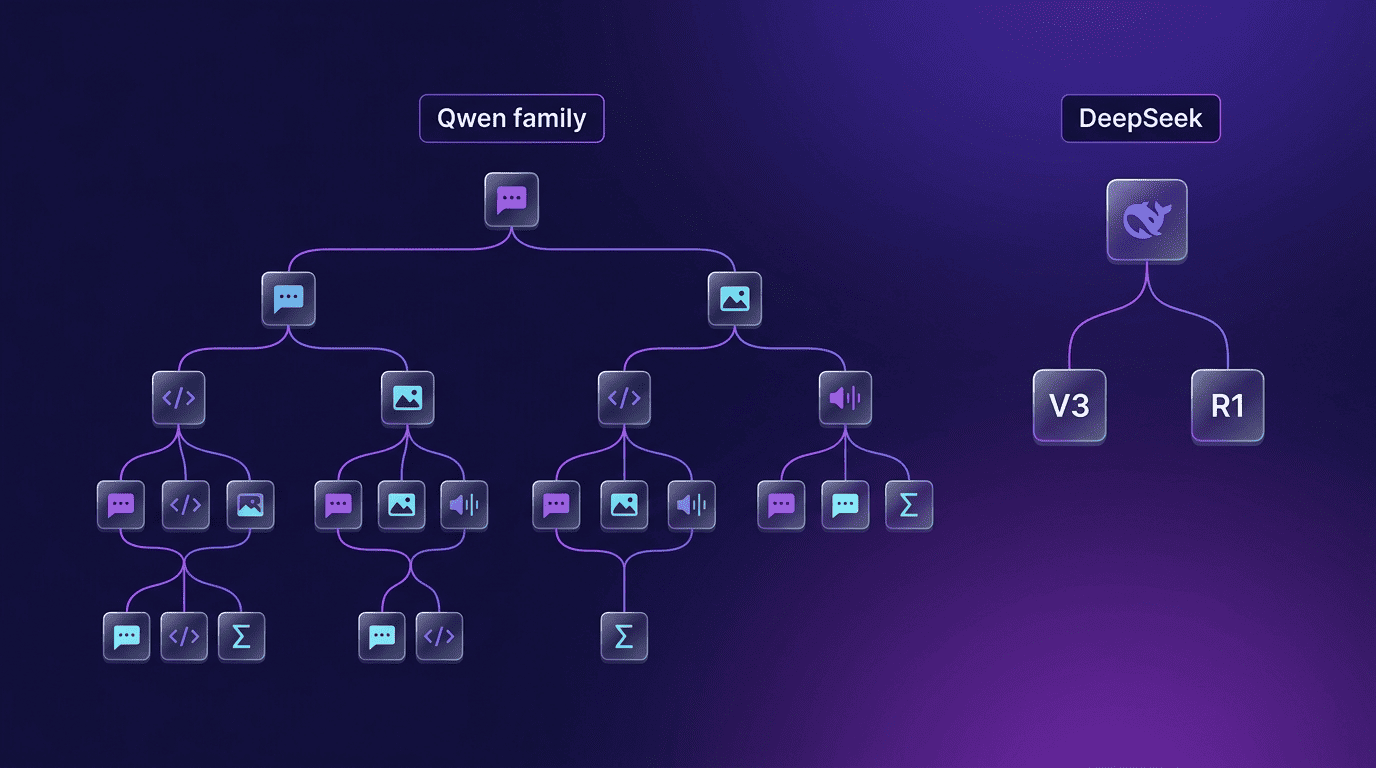
The two families are shaped by different missions. Qwen is a very broad model family that spans text, code, vision, audio, and math, backed by a hosted product — Qwen Chat — that puts the whole lineup behind one interface. DeepSeek is a tighter, research-driven lineup built around one strong general-purpose model, DeepSeek-V3, and one dedicated reasoning model, DeepSeek-R1. Neither approach is objectively superior; breadth and focus solve different problems.
| Qwen | DeepSeek | |
|---|---|---|
| Developer | Alibaba Cloud | Hangzhou DeepSeek (High-Flyer) |
| Country | China | China |
| Flagship general model | Qwen3 | DeepSeek-V3 |
| Reasoning model | QwQ / Qwen3 thinking mode | DeepSeek-R1 |
| Primary license | Apache 2.0 (many models) | MIT License (recent models) |
| Multimodal | Yes — Qwen-VL, audio, math variants | Limited, general-purpose focus |
| Hosted product | Qwen Chat | DeepSeek’s own chat and API |
Openness and Licensing: Apache 2.0 vs MIT
Licensing is where the two families diverge most concretely — it’s the difference between “you can ship this tomorrow” and “you need to ask permission first,” so it’s worth understanding before you build on either one.
What “open-weight” actually means
Both Qwen and DeepSeek publish model weights that anyone can download, run, and fine-tune on their own hardware. What neither family does is release its training data under an open license — so “open-weight” is the accurate term, not the looser “open-source,” which implies the full pipeline is public.
Open-weight access gives you:
- The ability to run the model on your own infrastructure, with no API dependency
- Fine-tuning rights, so you can adapt the model to a narrow domain
- Freedom to inspect architecture and weights directly
- No guarantee of transparency into the training data or the exact training process
The license split
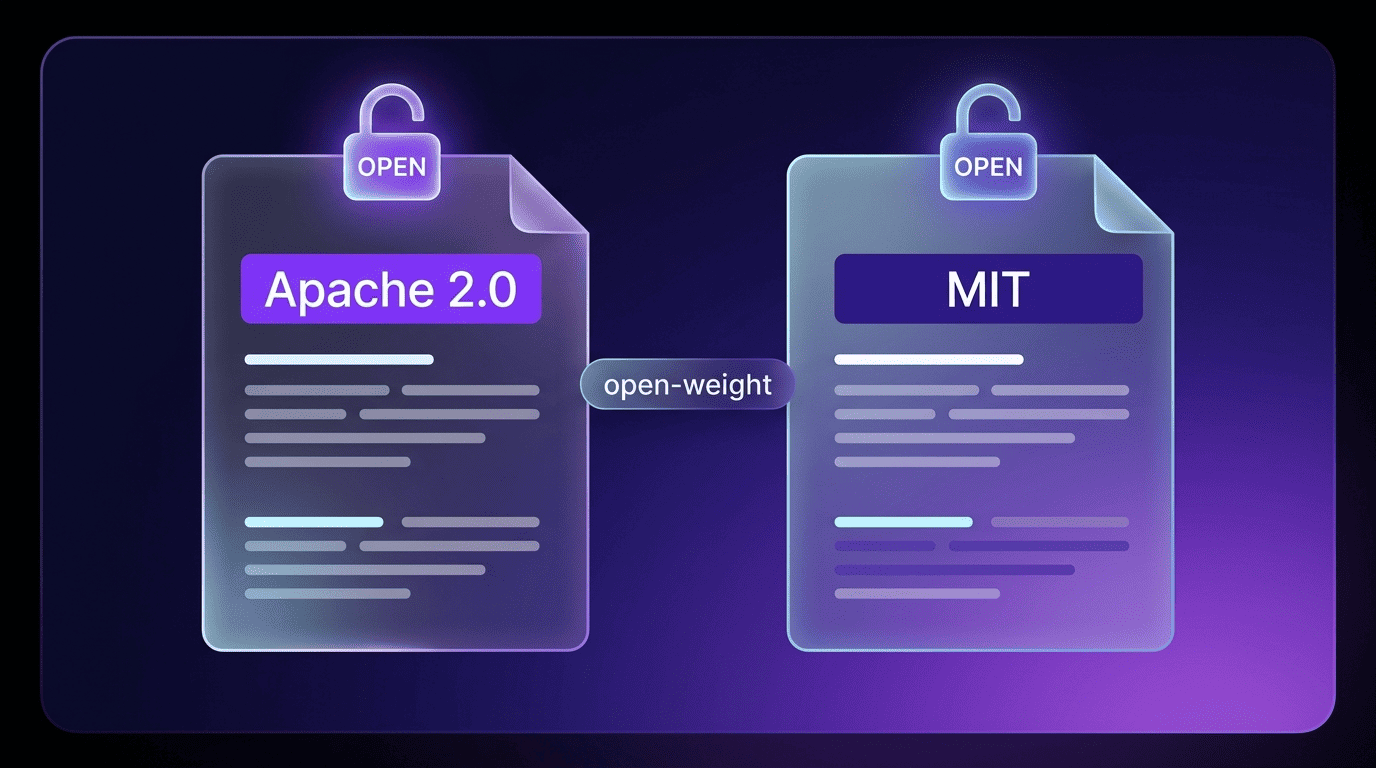
Qwen’s licensing is mixed rather than uniform. Many models — including much of the Qwen2.5 and Qwen3 lineup — ship under the permissive Apache 2.0 license. A handful of others are released under a source-available Qwen License or a non-commercial Qwen Research License, and a few of the largest variants are only served through Alibaba Cloud rather than downloaded outright. DeepSeek’s more recent models, by contrast, are released under the MIT License, one of the simplest and most permissive terms in software.
The practical difference shows up when you plan commercial use:
- Apache 2.0 and MIT both allow commercial use, modification, and redistribution with minimal friction
- Apache 2.0 adds an explicit patent grant, which some enterprise legal teams prefer
- A Qwen model under the non-commercial Research License cannot be deployed in a commercial product without separate terms
- Always check the specific model card — the license can differ between two models in the same family
Since the January 2025 debut of DeepSeek-R1, the company has made its new models available under free and open-source software licenses, like the MIT License.
Wikipedia, “DeepSeek”
Wikipedia’s entry on Qwen notes a parallel point on the other side: many Qwen models are distributed under the free and open-source Apache 2.0 license, which is why so much of the family shows up pre-packaged in third-party tooling without extra licensing steps.
Model Lineups: Breadth vs Focus
Once you get past licensing, the next question is what’s actually on offer — and here the “broad family” versus “tight lineup” contrast becomes concrete.
Qwen’s family
Qwen’s lineup is built for coverage. It spans Qwen2.5 and Qwen3 as the base and instruct models, QwQ and Qwen3’s “thinking” mode for reasoning-heavy tasks, Qwen-Coder for software development, and Qwen-VL for vision-language work, alongside additional audio and math-focused variants. Wikipedia puts the total at more than 100 open-weight models and over 40 million downloads across the family, which reflects how many different shapes and sizes Alibaba Cloud has shipped.
Qwen’s sub-families, at a glance:
- Qwen2.5 and Qwen3 — general-purpose base and instruct models
- QwQ and Qwen3 thinking mode — dedicated and built-in reasoning
- Qwen-Coder — code generation and completion
- Qwen-VL — vision-language, image and video understanding
- Audio and math-specialized variants for narrower use cases
DeepSeek’s lineup
DeepSeek takes the opposite approach: fewer models, each one carrying more weight. The lineup centers on DeepSeek-V3, a large Mixture-of-Experts general model with 671 billion total parameters that was released in December 2024, and DeepSeek-R1, a reasoning-focused model that followed in January 2025. Mixture-of-Experts is the architectural theme tying the family together — a design that activates only a subset of the model’s parameters per query rather than the whole network, which is one reason large MoE models can serve at more manageable cost than a dense model of the same total size.
| Qwen | DeepSeek | |
|---|---|---|
| General / base | Qwen2.5, Qwen3 | DeepSeek-V3 |
| Reasoning | QwQ, Qwen3 thinking | DeepSeek-R1 |
| Coding | Qwen-Coder | DeepSeek-V3 (general-purpose) |
| Vision / multimodal | Qwen-VL | — |
| Audio | Qwen-Audio variants | — |
| Math | Qwen-Math variants | DeepSeek-R1 (reasoning-driven) |
Reasoning Models: QwQ / Qwen3 Thinking vs DeepSeek-R1
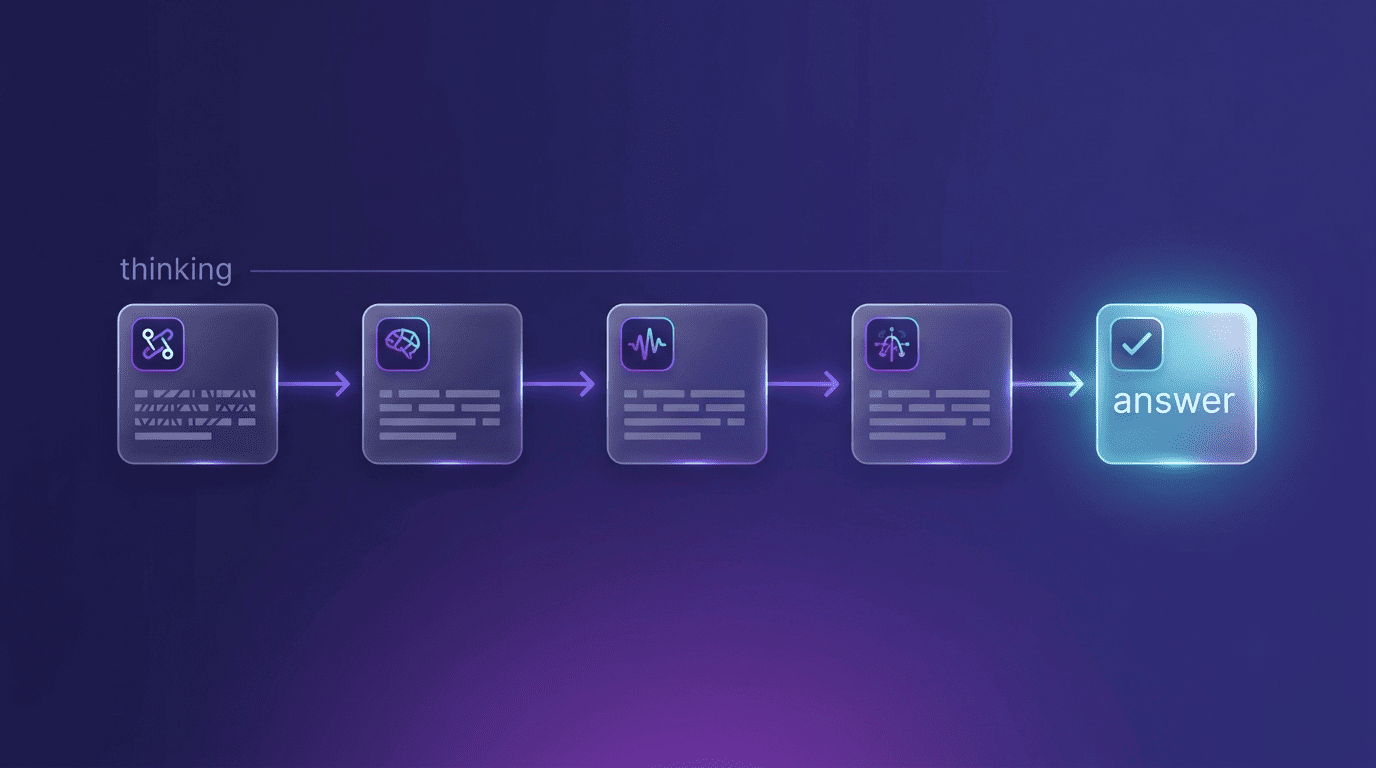
Both camps ship dedicated reasoning models that work through a problem step by step before producing a final answer, rather than jumping straight to a response. On the Qwen side, that’s QwQ and the “thinking” mode built into Qwen3, which the model can switch on for problems that benefit from explicit deliberation. On the DeepSeek side, it’s DeepSeek-R1, trained specifically for logical inference and mathematics with visible intermediate reasoning. DeepSeek-R1’s January 2025 release is widely regarded as a landmark moment for open reasoning models, since it made a capable “thinking” model freely downloadable rather than locked behind an API. Qwen answers with reasoning built into a broader toolkit, so you get thinking-mode behavior without leaving the rest of the family behind. Neither claim here is a benchmark score — it’s a description of approach and availability, and the right one for you depends on whether you want reasoning as a standalone specialist or folded into a general-purpose model you already use.
Coding and Multilingual: Where Each Leans
Two workflows tend to decide this comparison in practice: writing and debugging code, and working across more than one language. Neither family dominates outright, but each has a distinct lean worth knowing before you pick.
Coding
Qwen ships a dedicated coding line. Qwen-Coder is built and released specifically for software development tasks, separate from the general-purpose Qwen2.5 and Qwen3 models, which lets Alibaba Cloud tune it narrowly for code completion, refactoring, and multi-file context. DeepSeek folds coding into its general models. Both DeepSeek-V3 and DeepSeek-R1 are widely used for programming work even though neither is marketed as a coding-only release, and R1’s reasoning traces are particularly popular for debugging and multi-step logic. Neither wins outright. The honest framing is “both are strong, pick by workflow” — test on your own codebase and toolchain rather than trusting a general reputation, since coding performance is sensitive to language, framework, and prompt style.
Practical considerations when picking for code:
- If you want a model purpose-built for IDE integration, Qwen-Coder is the more targeted option
- If you already run DeepSeek-V3 or DeepSeek-R1 for other tasks, testing them on code first avoids adding a second model to your stack
- Reasoning models (QwQ, Qwen3 thinking, DeepSeek-R1) tend to help more on multi-step debugging than on quick autocomplete
- License terms matter here too — check whether the specific Qwen-Coder checkpoint you want is Apache 2.0 or restricted
Multilingual reach
Qwen3 was trained on 36 trillion tokens spanning 119 languages and dialects, a scale of multilingual coverage that Alibaba Cloud has made an explicit selling point of the family — and it’s a large part of why you’d try Qwen Chat if your work spans more than English and Chinese. DeepSeek’s models are capable multilingually as well, but multilingual breadth hasn’t been positioned as a headline feature of the DeepSeek lineup the way it has for Qwen3. If your use case touches many languages at once — support tickets, localization, or multilingual research — that gap in explicit positioning is worth weighing.
Pricing Model and Availability
How you actually pay
Because both families are open-weight, self-hosting is effectively free beyond the cost of your own compute — you’re not paying a per-token fee, just electricity and hardware. For teams that don’t want to run infrastructure, both companies also offer hosted APIs on a pay-per-token basis: Alibaba Cloud Model Studio serves the Qwen family, and DeepSeek runs its own API, documented at api-docs.deepseek.com. A wide range of third-party inference providers also host both families, often at competitive rates. Specific per-token rates change often enough that quoting numbers here would go stale fast — check the current pricing pages before committing to a provider.
Running them yourself
Both families are distributed on Hugging Face and GitHub, and both are supported by the standard open-model tooling ecosystem.
- Pick a model size that matches your available GPU memory
- Pull the weights from Hugging Face or the project’s GitHub repository
- Choose a runtime — Ollama and LM Studio for the simplest local setup, llama.cpp for CPU-friendly inference, or vLLM for high-throughput serving
- Quantize the model if your hardware is memory-constrained
- Benchmark on your own prompts before committing to a production deployment
Hardware reality matters here: the larger flagship models in both families need serious multi-GPU setups to run at full precision, while Qwen’s smaller variants are specifically built to suit edge devices and modest single-GPU machines — a distinction that doesn’t apply as cleanly to DeepSeek’s flagship-focused lineup.
How to Choose Between Qwen and DeepSeek
There’s no universal winner, so match the family to your actual constraints:
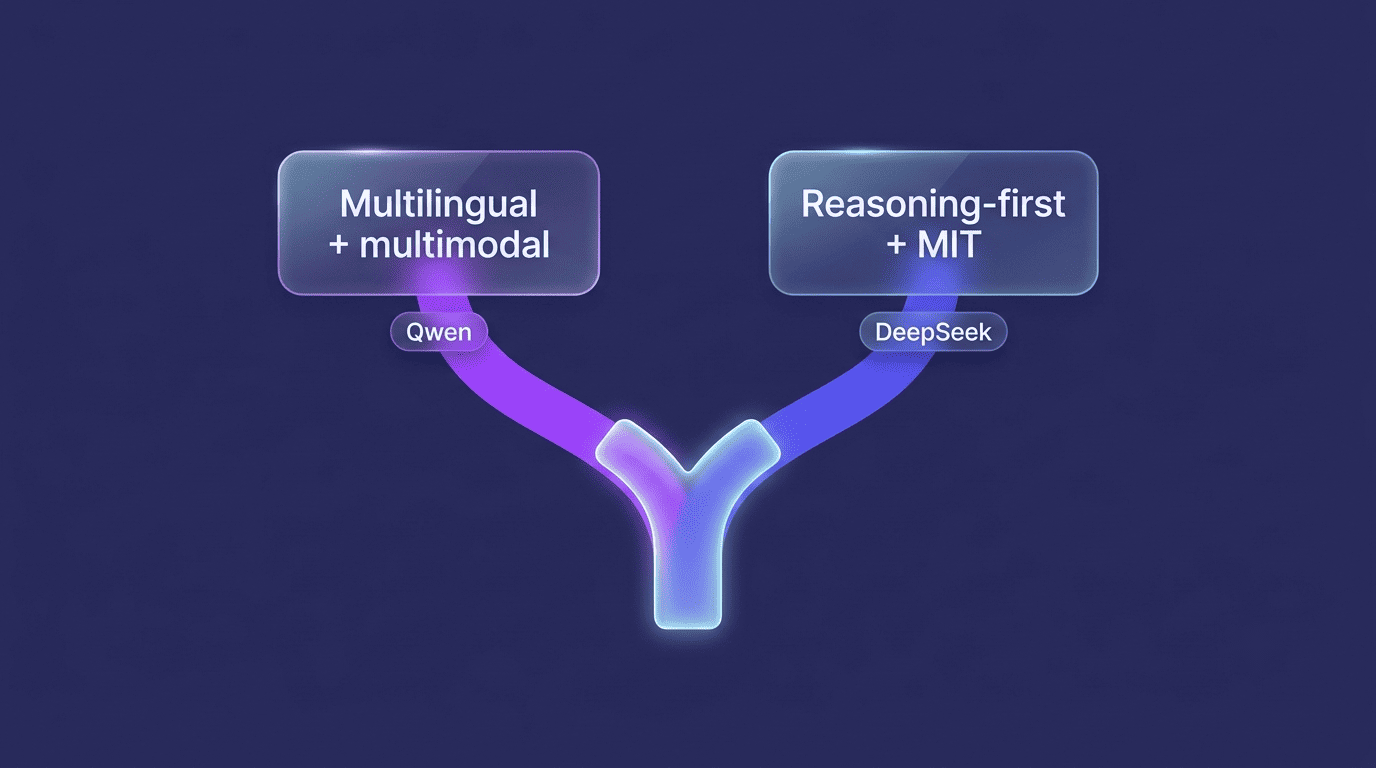
- Lean toward Qwen if you want multilingual and multimodal breadth (vision, audio, math) plus a ready hosted chat product you can try Qwen Chat free without any setup
- Lean toward DeepSeek if you want a focused, reasoning-first research lineage and prefer the simplicity of the MIT License across the board
- Consider running both if open weights and avoiding vendor lock-in matter more to you than picking a single “winner” — nothing stops you from using Qwen-Coder for development and DeepSeek-R1 for research reasoning
- Test before you commit — qualitative guidance only goes so far; your own prompts and workloads are the real tiebreaker