
Qwen Chat vs Claude: An Honest, Qualitative Comparison of Two AI Approaches
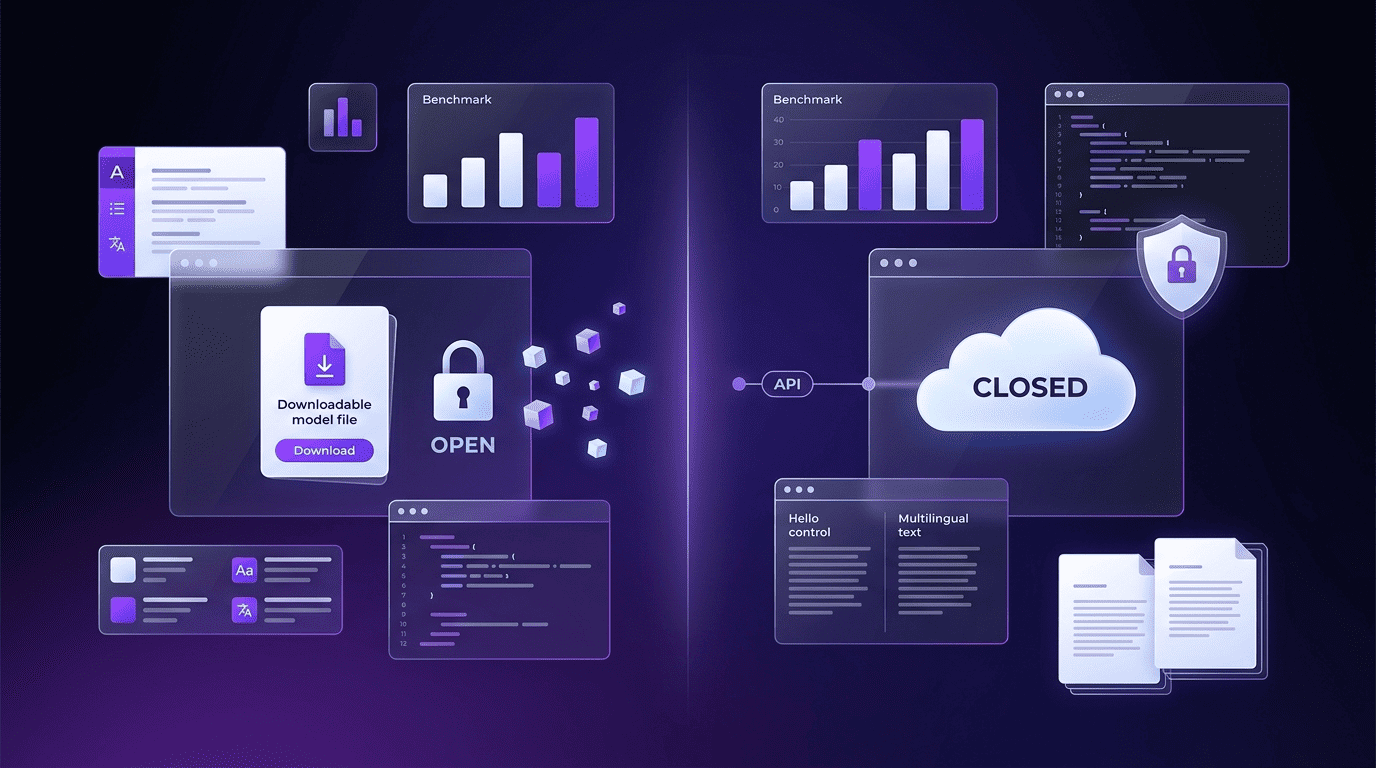
The real contrast between these two isn’t “which model is smarter” — it’s two different philosophies about how an AI model should reach you. Qwen chat is a free way to try Alibaba’s open-weight Qwen family, while Claude — led today by Anthropic’s flagship, Claude Fable 5 — is a proprietary model line reached only through an API or official apps.
This is a qualitative comparison — capabilities and design philosophy, not a benchmark shootout. Live benchmark numbers age fast and vary by task, so treat any single score you see elsewhere with caution.
This is an unofficial guide and is not affiliated with Alibaba/Qwen or Anthropic.
Qwen vs Claude at a Glance
The single biggest difference: Qwen ships as open-weight models you can download; Claude is a proprietary family you reach through an API and official apps. Everything else — cost structure, deployment options, who controls the data — flows from that one split. It’s worth keeping the comparison qualitative here, since raw scores don’t capture how differently the two are actually delivered.
| Dimension | Qwen | Claude Fable 5 |
|---|---|---|
| Developer | Alibaba’s Qwen team | Anthropic |
| Release model | Open-weight (most models) | Proprietary, closed-weight |
| Licensing | Apache 2.0 for open-weight releases | Not open-licensed |
| How you access it | Hosted chat, API, or local download | Hosted apps and API only |
| Self-hosting | Yes — download and run your own hardware | No — no downloadable weights |
| Design emphasis | Openness, multilingual reach, permissive licensing | Safety-centered research, managed reliability |
The core split in one line
Qwen means open weights, self-hostable, permissive license. Claude means closed weights, managed service, safety-first positioning. Once you accept that framing, most of the other differences — pricing, deployment, who can inspect the model — follow logically rather than needing a separate argument each.
Openness and Licensing: The Defining Difference
Licensing is where the two projects diverge most sharply, and it’s the one axis that’s fully verifiable rather than a matter of taste.
All our open-weight models are licensed under Apache 2.0.
— the Qwen team, Qwen3 GitHub README
What “open weight” means for Qwen
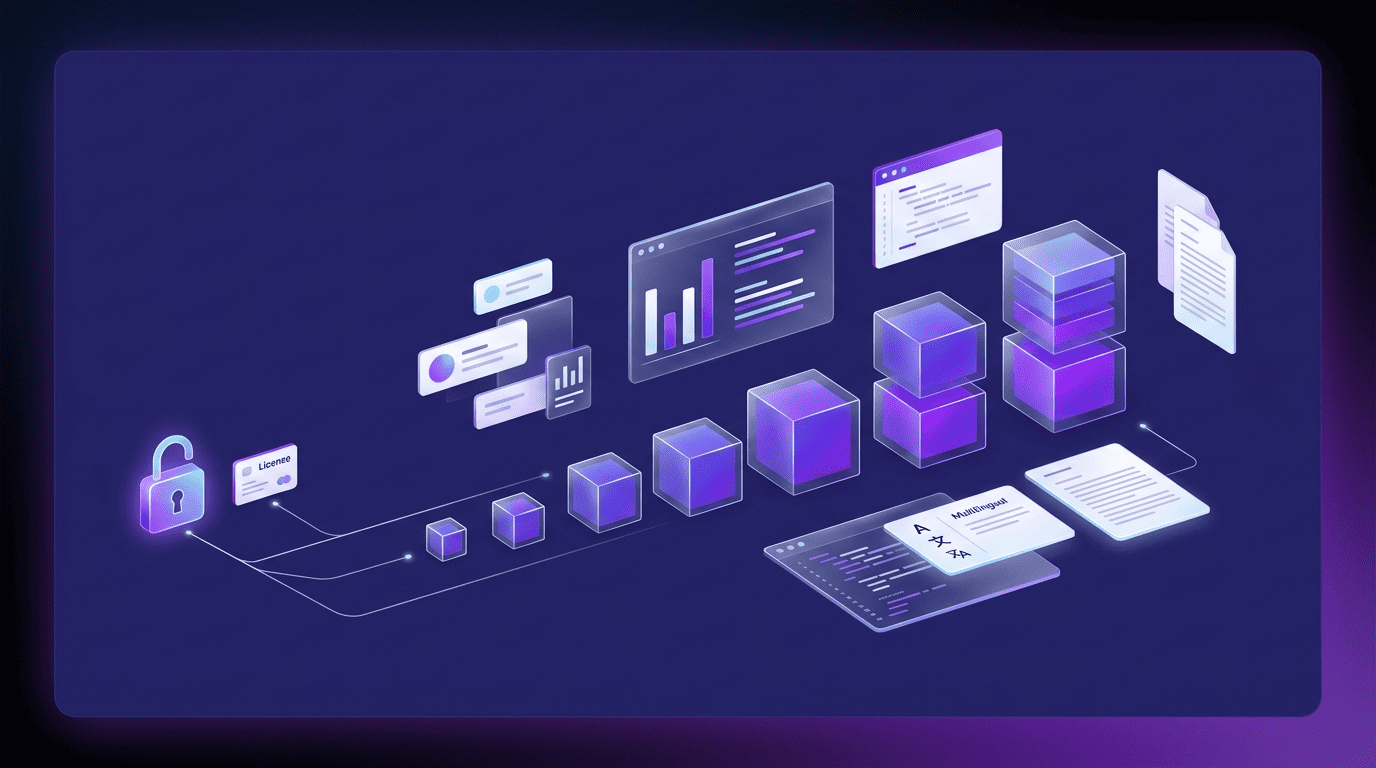
Many Qwen models are released under the Apache 2.0 license — download, run locally, fine-tune, and ship in a product, with no per-token fee owed to the vendor. Qwen3’s open weights span dense models from 0.6B to 32B parameters and Mixture-of-Experts (MoE) variants at 235B-A22B and 30B-A3B, distributed through Hugging Face and ModelScope. Full technical detail lives on the Qwen3 GitHub repository.
What “proprietary” means for Claude
Anthropic’s Claude family is closed-weight: you use it through Anthropic’s API and official apps, not by downloading the model onto your own hardware. That holds for the current flagship, Claude Fable 5, just as it did for every earlier release — Anthropic keeps the weights proprietary regardless of which model is newest, so this comparison rests on that structural fact rather than on any single benchmark score.
A few practical consequences follow from this split:
- Data residency. With Qwen’s open weights, you can run inference entirely on infrastructure you control, so nothing leaves your environment. Claude’s proprietary models process requests through Anthropic’s service.
- Air-gapped deployment. Only a downloadable model can run fully offline. Qwen supports this; Claude does not, since it requires reaching Anthropic’s API.
- Vendor lock-in. Open weights mean you aren’t dependent on one company staying online or keeping its pricing stable. A proprietary API ties your product to that vendor’s roadmap.
- Managed reliability. The trade-off runs the other way too — a managed service like Claude removes the burden of hosting, scaling, and patching a model yourself.
- No download for Claude. There is no equivalent of “grab the weights” for Claude; access is strictly through Anthropic’s channels.
Pricing Models Compared
The two aren’t just different products — they’re different economic models, and that shapes who each one suits.
Qwen: free weights, you pay for compute
The weights themselves cost nothing under Apache 2.0; your actual cost is hardware and hosting, whether that’s your own GPUs or a third-party inference provider. A hosted option like qwen ai chat can be free to try without any setup at all.
Claude: metered access
Claude Fable 5, like the rest of Anthropic’s line, is proprietary and typically reached through usage-based API pricing or a subscription plan. The pricing model is metered access rather than a one-time download — specific rates change over time, so this guide won’t cite dollar figures that could already be stale by the time you read it.

Which model wins depends heavily on your usage pattern:
- Self-hosting an open-weight Qwen model tends to win at scale, once your volume is high enough that fixed hardware costs beat per-token fees.
- A metered API like Claude tends to win for low-to-moderate, unpredictable usage, since there’s no infrastructure to provision or maintain.
- Zero-ops managed access — either a hosted Qwen chat interface or Claude’s apps — wins when you want to start immediately with no setup.
Coding
Both model families are used seriously for code generation, debugging, and explaining unfamiliar code. Qwen offers a dedicated Qwen-Coder line built specifically for programming tasks, plus a “thinking mode” that spends more computation on logic, math, and multi-step reasoning before answering. Claude Fable 5 is widely used inside developer tooling and coding assistants. Neither claim here rests on a specific benchmark number — coding quality varies by language, task type, and prompt, so the honest answer is to try both on your actual workload rather than trust a single leaderboard score.
Long Context
Both families handle long inputs reasonably well, which matters for anything beyond a short chat exchange. Qwen’s larger models support a 128K-token context window, enough to hold lengthy documents, large codebases, or full transcripts in a single pass. Claude Fable 5 is also known for handling large context windows, though its exact published limit is worth checking on Anthropic’s current model card rather than assuming a figure. For document-heavy or codebase-wide tasks, this is one of the more decision-relevant axes — worth testing directly on your own material rather than assuming either wins by default.
Multilingual Support
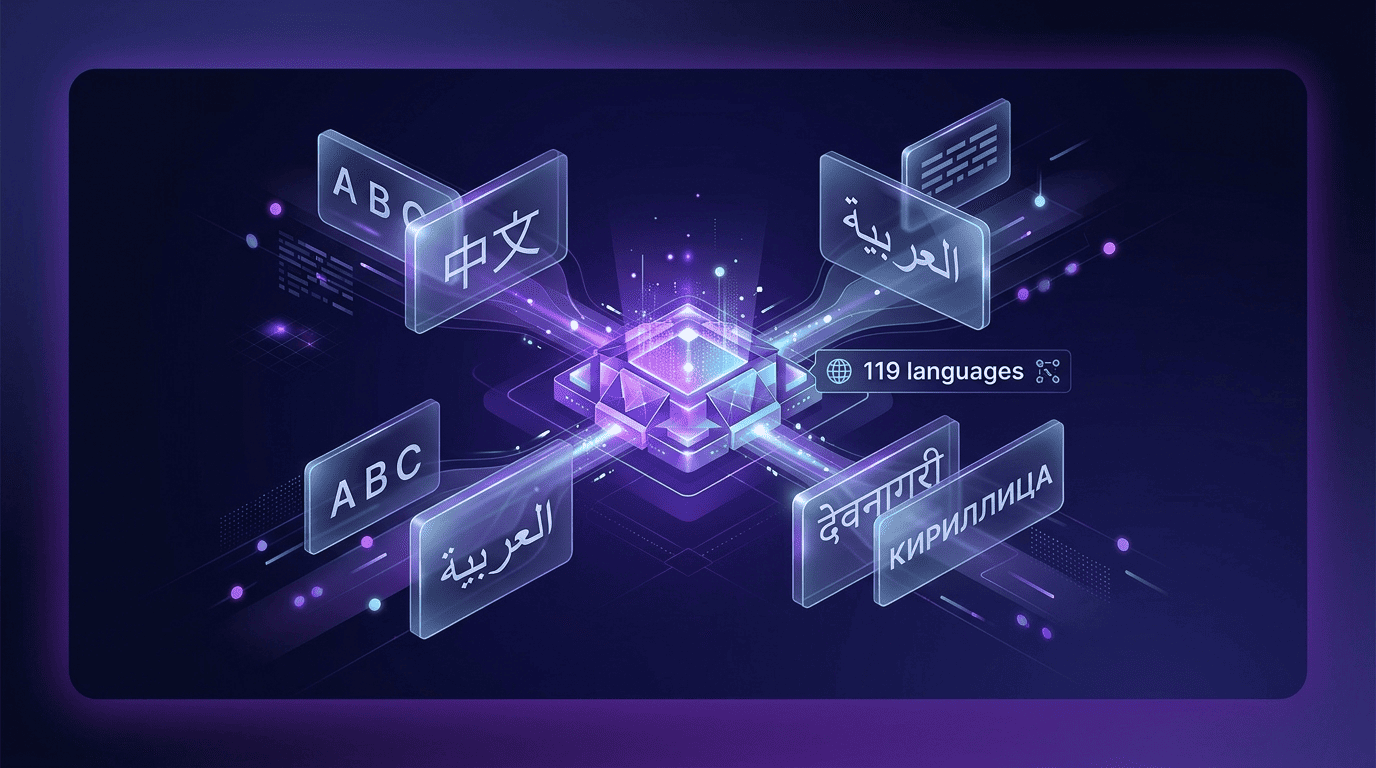
Language coverage is one area where Qwen states its numbers plainly. Qwen3 officially supports 119 languages and dialects, with particular strength in translation and instruction-following, plus deep fluency in Chinese-origin tasks given its origin at Alibaba. Claude Fable 5 is well regarded for natural, fluent writing across major world languages, though Anthropic doesn’t publish an equivalent language count.
Multilingual strength matters most in a handful of concrete situations:
- Translation pipelines — batch or real-time translation across many source languages.
- Localized chat products — a single assistant serving users in dozens of native languages without separate models per market.
- Cross-lingual retrieval — finding and summarizing information written in a language different from the query.
Safety and Design Focus
Anthropic publicly centers AI safety in its research and product design — this is a consistent, well-documented part of the company’s stated mission, described in general terms on Anthropic’s site. Qwen’s contribution to safety is different in kind rather than competing on the same terms: because the weights are open, anyone can inspect the model, audit its behavior, and run it entirely within their own environment with no data leaving their infrastructure. Both are legitimate approaches to safety — one through centralized research and alignment work, the other through transparency and local control — and neither fully substitutes for the other.
Availability and How to Access Each
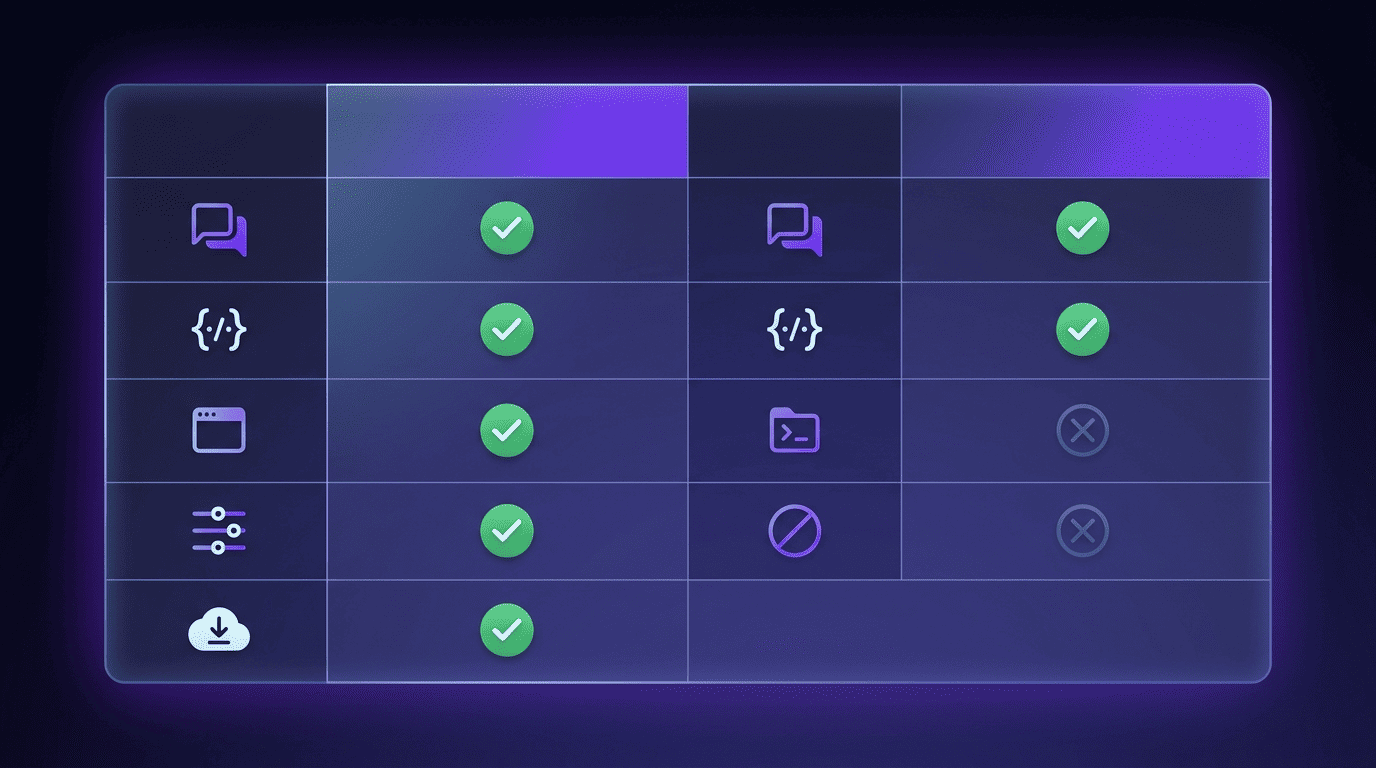
| Access path | Qwen | Claude Fable 5 |
|---|---|---|
| Hosted chat | Yes | Yes |
| API | Yes | Yes |
| Self-host / local | Yes | No |
| Fine-tune your own copy | Yes | No |
| Offline / air-gapped use | Yes | No |
Qwen reaches you through a hosted chat, a standard API, a direct download you can run and fine-tune yourself, or a fully offline deployment. Claude reaches you only through Anthropic’s hosted apps and API — there’s no local download path. If you want to see the open-weight side in practice without installing anything, try qwen chat first.
Which Should You Choose?
There’s no single winner here — the right pick depends on what you actually need, not on which model “wins” a leaderboard.
- Pick Qwen if you need local or offline deployment, strict data residency, the ability to fine-tune on your own data, no per-token fee at scale, or broad multilingual coverage.
- Pick Claude Fable 5 if you want a managed, safety-focused assistant with no infrastructure to run, and you’re comfortable with usage-based or subscription pricing.
- Consider both if different parts of your workflow have different constraints — some teams run an open-weight Qwen model for high-volume internal tasks while using Claude for other work.