
Qwen Chat vs ChatGPT: An Honest, Qualitative Comparison
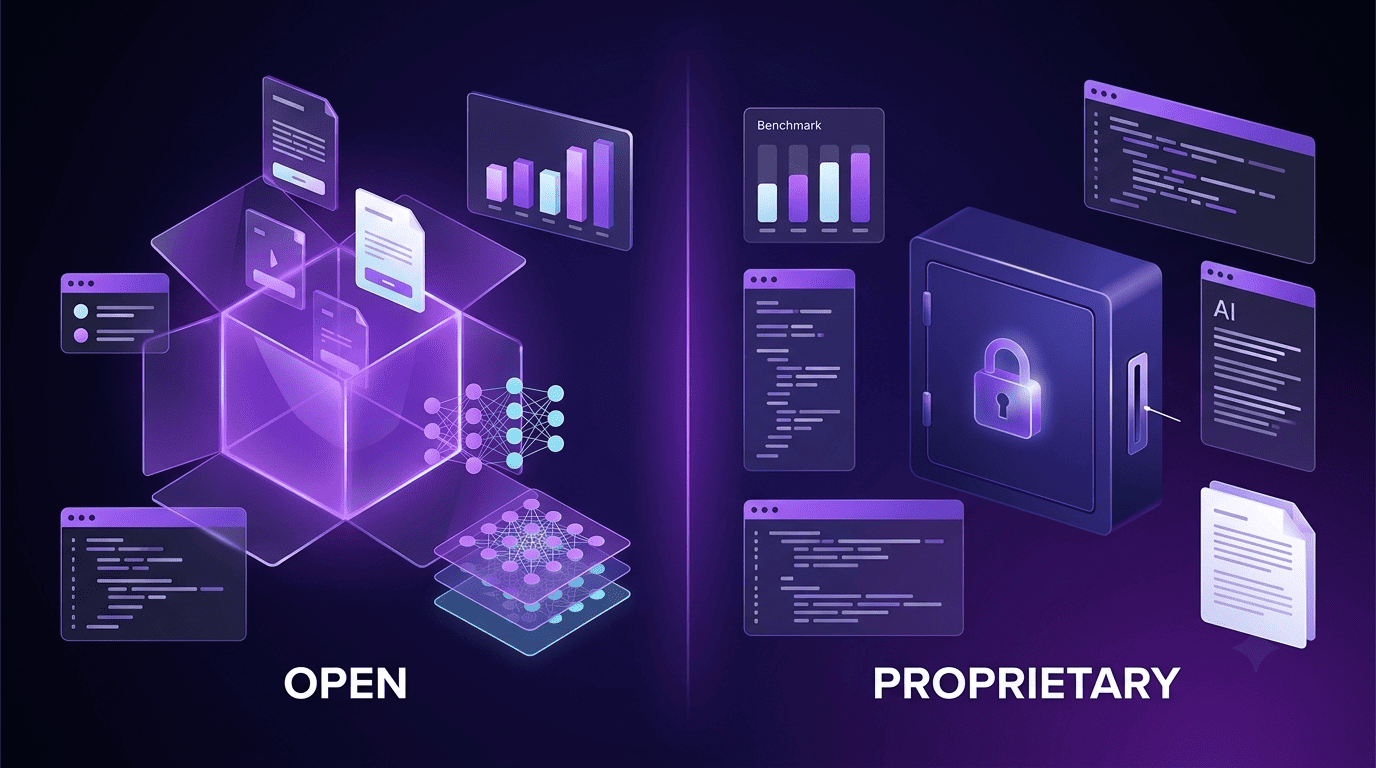
Choosing between Qwen and ChatGPT comes down to one big fork — an open-weight model you can own versus a polished proprietary product you rent. You can try Qwen Chat free in the browser, but the deeper differences run through openness, languages, coding, and ecosystem, and OpenAI’s ChatGPT — led today by its current flagship, GPT-5.6 Sol — sits on the other side of that fork as a hosted product.
This is a fair, qualitative comparison — no invented benchmark scoreboards, no made-up scores. This is an unofficial, independent resource — not affiliated with, endorsed by, or sponsored by Alibaba/Qwen or OpenAI. Product names belong to their respective owners.
The core difference: open-weight vs proprietary
Qwen, developed by Alibaba Cloud, and ChatGPT, developed by OpenAI, start from opposite premises. Qwen is released as open-weight models under the Apache 2.0 license, which means the underlying model files are downloadable and you can inspect, modify, and self-host them. ChatGPT is a proprietary hosted product — you use it through OpenAI’s app or API, but you never get the weights themselves. That single distinction shapes almost everything else in this comparison: who controls the deployment, who can fine-tune freely, and who is stuck depending on a vendor’s uptime and pricing decisions.
What “open-weight” means for Qwen
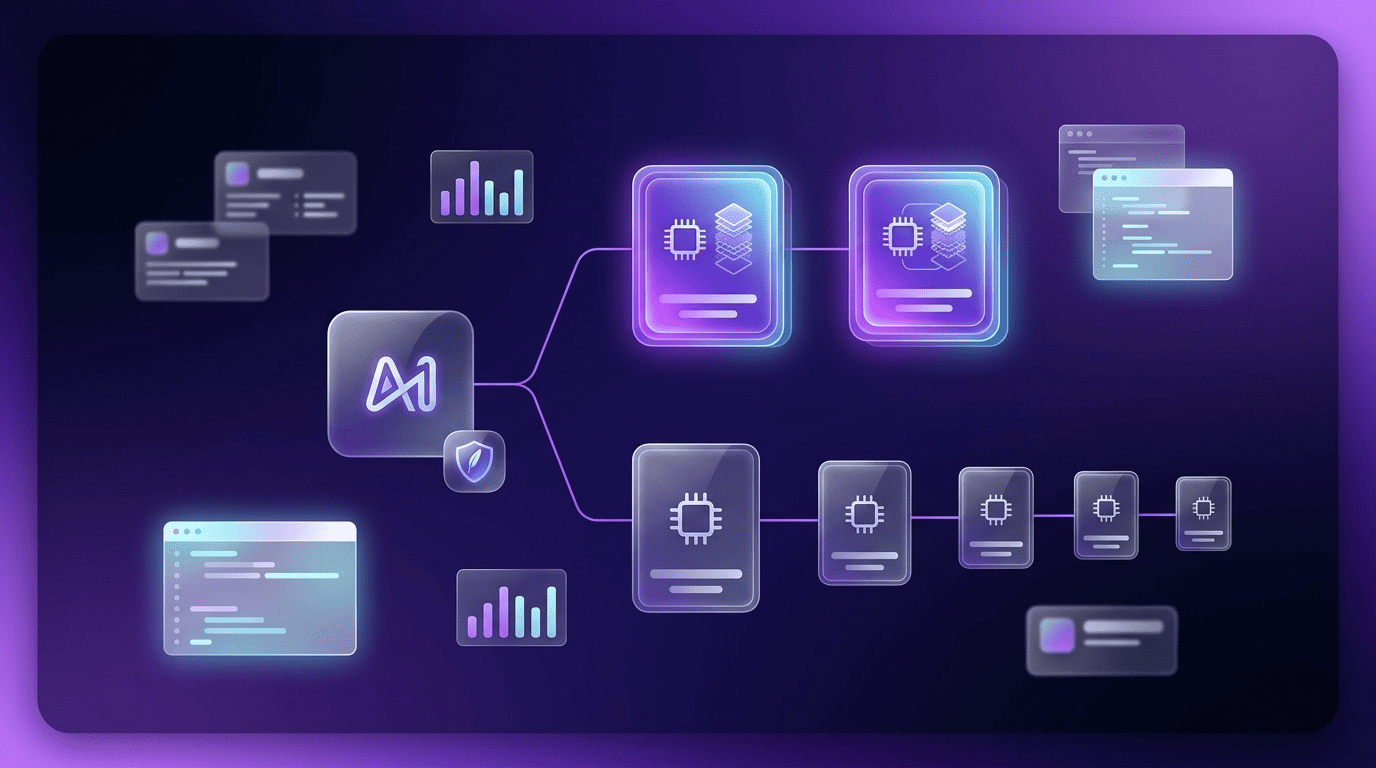
Qwen AI releases downloadable model weights rather than keeping them locked behind an API. Per the Qwen team, Qwen3 open-weights eight models — two Mixture-of-Experts models (Qwen3-235B-A22B and Qwen3-30B-A3B) and six dense models (32B, 14B, 8B, 4B, 1.7B, 0.6B) — under the permissive Apache 2.0 license, distributed on Hugging Face, ModelScope, and the official GitHub repository. That means a team can inspect the architecture, fine-tune on its own data, and deploy the result wherever it wants, including entirely offline.
We believe that the release and open-sourcing of Qwen3 will significantly advance the research and development of large foundation models.
Qwen Team, Qwen3: Think Deeper, Act Faster
Where ChatGPT sits
ChatGPT is OpenAI’s consumer product, powered by its GPT-series models — currently led by the GPT-5.6 Sol flagship — and offered primarily as a hosted, proprietary service you access through the web app, mobile app, or the OpenAI API. There is no equivalent weights download — you rent access to the model rather than owning a copy of it. That trade-off buys convenience: no infrastructure to run, no fine-tuning pipeline to build, just an account and a prompt box.
Table 1 — Qualitative comparison at a glance
| Dimension | Qwen (Alibaba) | ChatGPT (OpenAI) |
|---|---|---|
| Openness | Open-weight, Apache 2.0 | Proprietary, closed weights |
| Primary access | Qwen Chat web app + API + downloadable weights | ChatGPT web/app + API |
| Self-hosting | Yes, on your own hardware or cloud | No, hosted only |
| Pricing model | Free chat + usage-based API + zero license fee to self-host | Free tier + paid subscription + usage-based API |
| Multilingual | 119 languages and dialects (per Qwen team) | Broad, historically English-strongest |
| Coding | Dedicated Qwen-Coder line | Strong general-purpose coding via GPT-5.6 Sol |
| License | Apache 2.0 (most releases) | Proprietary terms of service |
| Ecosystem maturity | Growing open-source community, Hugging Face downloads | Mature, wide third-party integrations |
Pricing model: what you actually pay for
Instead of quoting numbers that will be stale by the time you read them, it’s more useful to understand the shape of each pricing model. Alibaba Cloud hosts the paid API tier for Qwen, while the open weights themselves are free to download and run under Apache 2.0. OpenAI runs a more traditional freemium-to-subscription funnel around ChatGPT Plus, with API billing layered on top for developers who build against GPT-5.6 Sol and the wider GPT-series directly.
Qwen’s cost structure
- Free consumer chat interface (Qwen Chat).
- Usage-based API through Alibaba Cloud for the hosted models.
- Open weights carry no license fee — self-hosting cost is your own hardware and compute.
ChatGPT’s cost structure
- Free tier for casual use.
- Paid subscription for higher limits and premium features.
- Usage-based API pricing for developers.
- Exact figures change over time — check openai.com for current pricing rather than relying on a cached number.
Multilingual strength
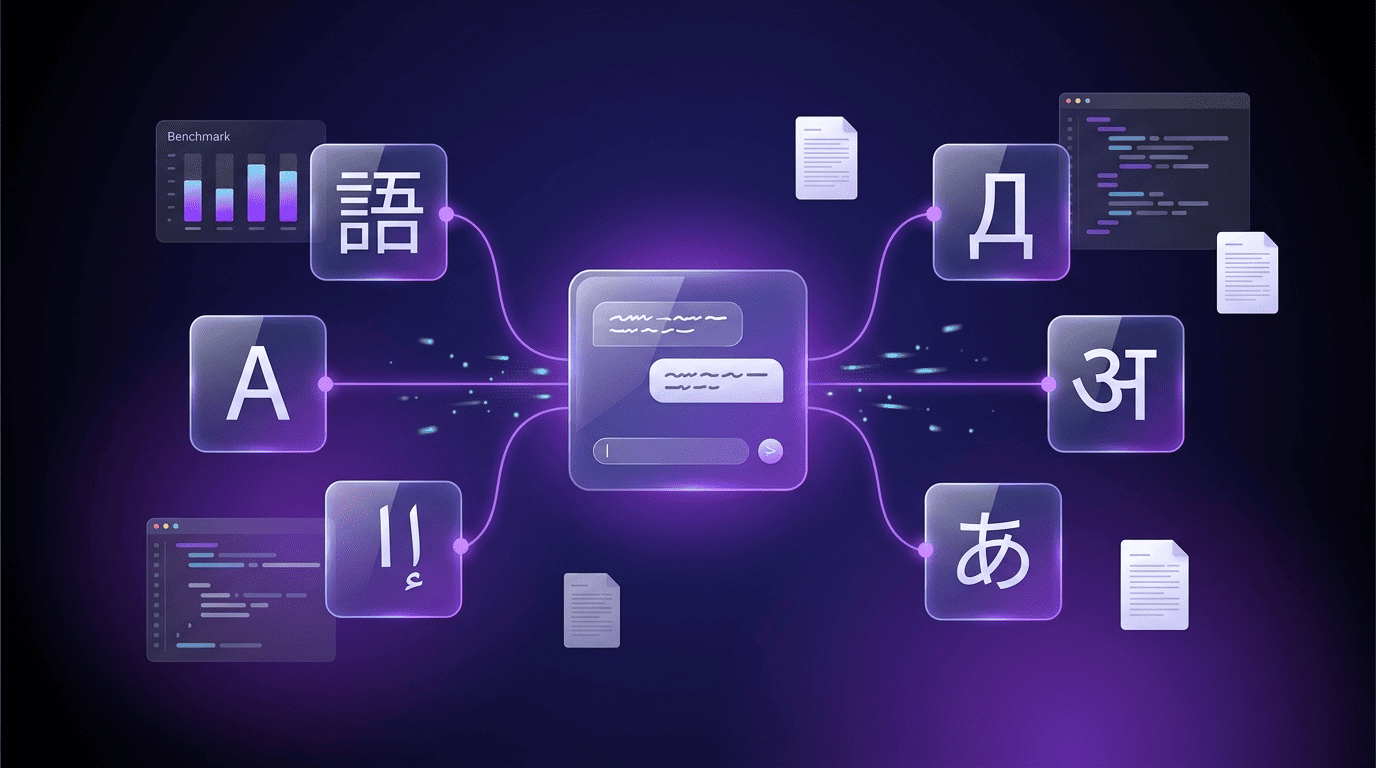
Multilingual coverage is where Qwen makes its clearest documented claim. The Qwen team states that Qwen3 supports 119 languages and dialects, a scope explicitly aimed at teams building products that serve markets beyond English. ChatGPT’s multilingual capability is broad and generally strong, but OpenAI has historically emphasized English performance and English-first tooling, with other languages following as the ecosystem around GPT-series models matured.
Qwen’s language coverage
Qwen3 is documented by its team to support 119 languages and dialects, and the family has a strong footprint in Chinese and Asian languages alongside English and European languages. For teams shipping multilingual products, that breadth of coverage — built into the model rather than bolted on — is a genuine differentiator against a model family that treats non-English support as secondary.
ChatGPT’s language coverage
ChatGPT offers broad multilingual capability with particularly strong English performance and a large body of English-language tooling and documentation. If your workflow is primarily English, the practical gap between the two narrows considerably; the difference shows up mainly when you push into less common languages or dialects.
Coding ability
Qwen ships a coding-specialized line built for developers who want a model tuned specifically for code. Qwen-Coder (also released as Qwen3-Coder) targets code generation and completion as a first-class use case rather than a side effect of general training. ChatGPT, by contrast, leans on the general capability of its GPT-series models — currently the GPT-5.6 Sol flagship — which remain widely used for coding despite not being a dedicated coding product line.
Qwen for developers
- Dedicated Qwen-Coder models for code generation and completion.
- Open weights let teams fine-tune on their own codebases and run offline.
- Fits agentic and tooling workflows where control over the model matters.
ChatGPT for developers
ChatGPT offers strong general-purpose coding help, mature developer tooling and IDE integrations, and a large community producing documentation, plugins, and workflow guides. For a developer who just wants an assistant without setting up any infrastructure, that maturity is hard to beat.
Context length, modes, and availability
Both families now ship long-context variants, and both keep improving that number over time — so a specific token count quoted today risks being outdated by the time you read it. What’s stable is the structural difference: Qwen’s context handling and reasoning modes are things you can inspect and configure yourself, while ChatGPT’s are tuned by OpenAI behind the API.
Thinking modes
Qwen3 introduces a hybrid approach with a Thinking Mode and a Non-Thinking Mode, letting users trade depth of reasoning against speed per task. That switch is exposed directly, so a developer can choose slower, more deliberate reasoning for a hard problem and fast responses for routine queries within the same model family.
Availability & regions
Because Qwen’s open weights are downloadable, they can be deployed in your own environment regardless of region. ChatGPT is a hosted product whose availability depends on OpenAI’s service coverage, which matters if you operate in a region or under a compliance regime where sending data to a third-party API isn’t an option.
Table 2 — Which one fits your use case?
| Your priority | Better fit | Why |
|---|---|---|
| Data control / self-hosting | Qwen | Open weights run entirely in your own environment |
| Non-English & Asian languages | Qwen | 119 languages and dialects documented by the Qwen team |
| Fine-tuning on your own data | Qwen | Apache 2.0 weights are yours to modify freely |
| Zero-setup polished UX | ChatGPT | No infrastructure, just an account |
| Widest 3rd-party integrations | ChatGPT | Mature ecosystem of plugins and tooling |
| No infra to manage | ChatGPT | Fully hosted by OpenAI |
| Free browser chat | Either | Qwen Chat is free; ChatGPT has a free tier too |
Ecosystem and who should choose what
Qwen’s ecosystem is younger but growing quickly: Hugging Face download counts, community fine-tunes, and ModelScope listings all point to an open-source community building on top of the base models rather than waiting for a vendor roadmap. ChatGPT’s ecosystem, by contrast, is mature and wide — years of third-party integrations, IDE plugins, and enterprise tooling built around a single hosted API that hasn’t changed its fundamental access model.
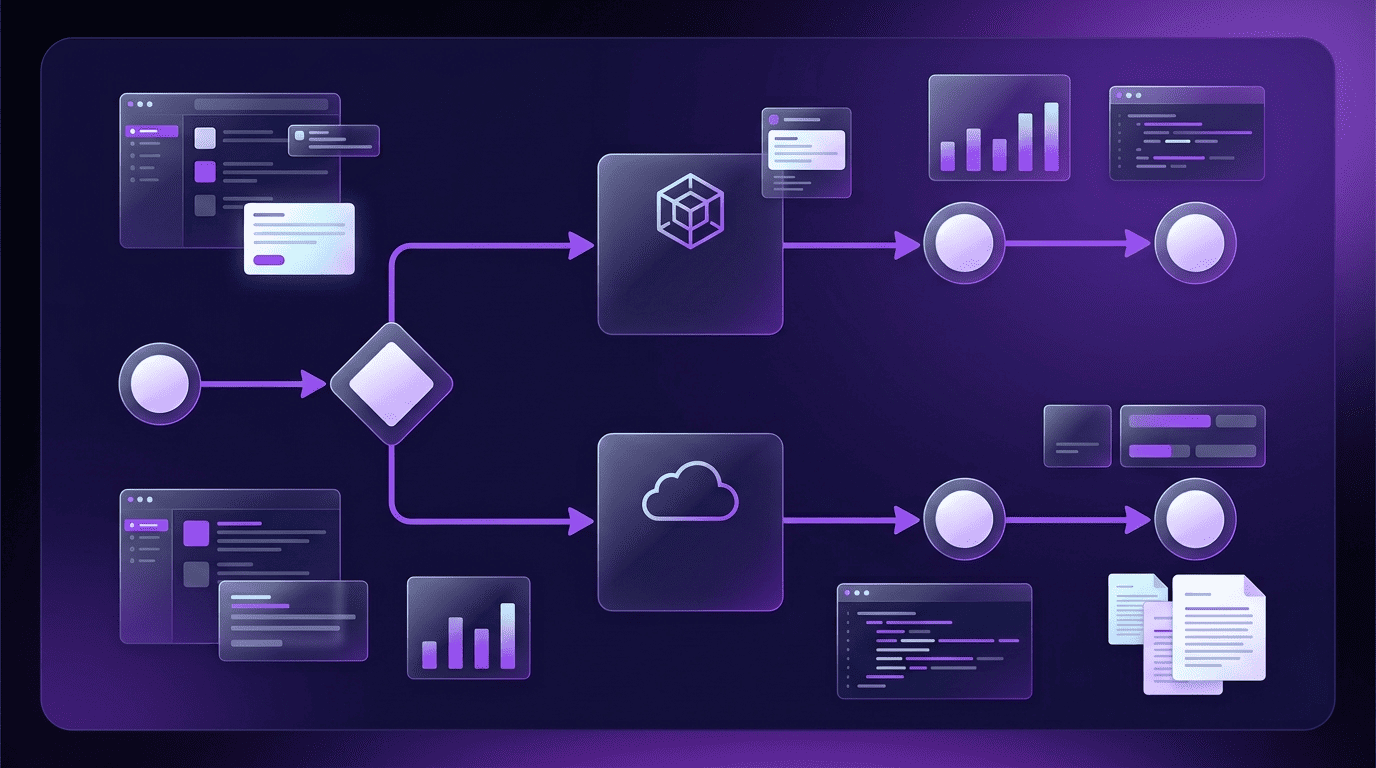
Here’s a quick way to work through the decision yourself:
- Decide whether you need to self-host or fine-tune on proprietary data — if yes, Qwen is the only option of the two.
- Check which languages your users actually need — if it’s mostly non-English or Asian-language coverage, weigh Qwen’s documented 119-language support.
- Estimate your infrastructure appetite — zero ops and a polished UI point toward ChatGPT.
- Test coding workflows on both — try Qwen-Coder for a codebase-specific task and GPT-5.6 Sol for a general one.
- Compare the pricing model, not a single number — usage-based API costs scale differently for a self-hosted open model versus a hosted subscription.
- Pilot both on a real task before committing a team workflow to either.
Bottom line
- Pick Qwen if you value openness, self-hosting, multilingual breadth, or fine-tuning control.
- Pick ChatGPT if you value a polished hosted experience, the widest integration ecosystem, and zero infrastructure.
- Many teams use both — an open model for control and a hosted one for convenience.